


Digital Cemetery Mapping: What It Is, How It Works, and Why Every Cemetery Should Consider It
- Eli Lubbehusen

- Jun 25
- 4 min read
What Is Digital Cemetery Mapping?
For generations, many cemeteries have relied on paper maps, handwritten burial records, index cards, and printed lot books to manage burial information. While these methods have served cemeteries for decades, they can become increasingly difficult to maintain as records age, staff changes, and information accumulates.

Digital cemetery mapping is the process of converting traditional cemetery records into an accurate, searchable digital map and database. Instead of searching through filing cabinets or paper ledgers, cemetery staff can quickly locate graves, view burial information, and manage cemetery records from a computer or mobile device.
A properly digitized cemetery combines historical records, burial information, grave locations, and interactive mapping into one organized system that is easier to manage, update, and preserve for future generations.
Why Traditional Cemetery Records Become Difficult to Manage
Many cemeteries face similar challenges.
Over time, paper records can become worn, damaged, or misplaced. Handwritten notes may become difficult to read, and maps created decades ago often no longer accurately represent the current layout of the cemetery.
It's also common for information to be stored in multiple places, including:
Paper burial ledgers
Index cards
Printed cemetery maps
Excel spreadsheets
Filing cabinets
Individual employee knowledge
When records are spread across several systems, finding information becomes time-consuming and increases the likelihood of errors.
How Digital Cemetery Mapping Works
Although every cemetery is different, the digitization process generally follows several key steps.

1. Record Collection
Existing records are gathered, including:
Burial registers
Lot ownership records
Deeds
Maps
Index cards
Historical documents
Even incomplete records can often be incorporated into a digital system.
2. Record Digitization
Paper documents are scanned and preserved digitally to protect valuable historical information from loss or deterioration.
These digital copies create permanent backups while making records easier to access.
3. Record Transcription
Important information from historical records is carefully entered into a searchable database.
This may include:
Name
Birth date
Death date
Burial date
Section
Lot
Grave number
Veteran status
Notes
Family relationships
Once digitized, information can be searched within seconds.
4. Cemetery Mapping
Each burial space is placed onto a digital cemetery map.
Depending on the project, this may involve:
Existing cemetery plats
Survey data
GPS data collection
On-site verification
Aerial imagery
The result is a visual representation of the cemetery that allows staff to quickly locate graves and available spaces.
5. Quality Verification
One of the most important steps is verifying the accuracy of both the records and the map.
Historical records occasionally contain inconsistencies that have accumulated over decades.
Comparing records with physical grave markers helps identify discrepancies before they become long-term issues.
Benefits of Digital Cemetery Mapping
Find Graves in Seconds
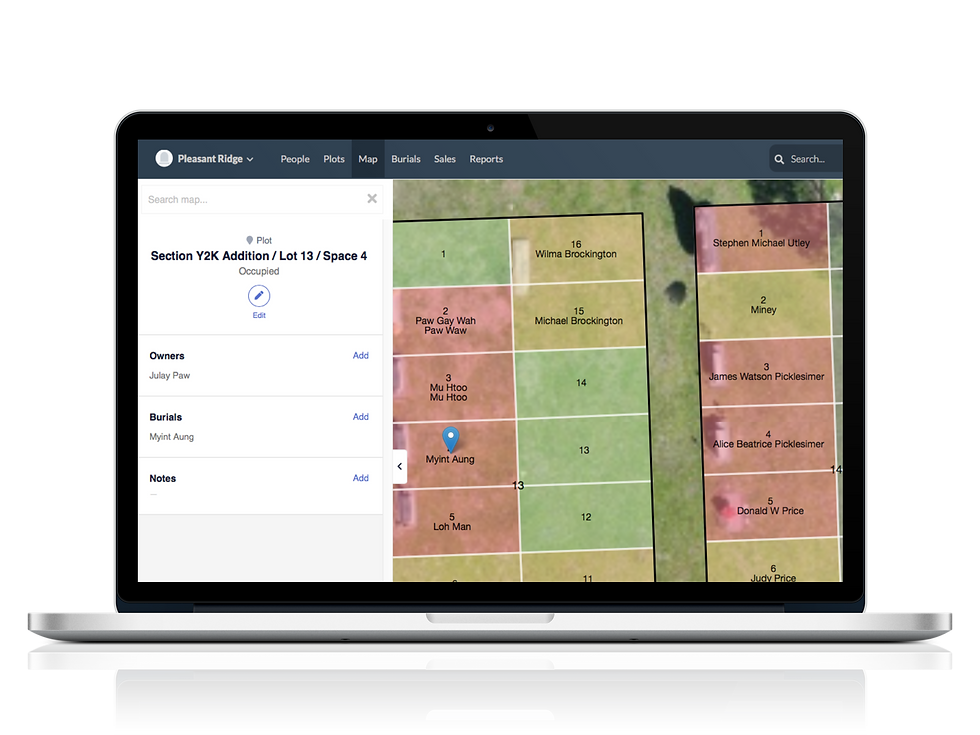
Instead of searching through filing cabinets or multiple spreadsheets, staff can simply search a person's name and immediately locate their burial location.
This improves efficiency and provides faster service to families.
Preserve Historical Records
Many cemetery records are irreplaceable.
Digitizing these documents protects valuable historical information from:
Fire
Water damage
Aging paper
Fading ink
Accidental loss
Digital backups help ensure these records remain available for future generations.
Improve Record Accuracy
As records are digitized, inconsistencies and missing information often become easier to identify.
Correcting these issues creates a more reliable cemetery database and reduces future confusion.
Better Cemetery Management
Digital maps make it easier to:
Track available burial spaces
Plan future expansions
Verify ownership records
Locate family plots
Manage maintenance activities
Instead of relying on memory or paper maps, staff have accurate information readily available.
Better Service for Families
Families often visit cemeteries during difficult times.
Being able to quickly locate a loved one's grave and provide accurate information creates a much better experience than searching through paper records.
Easier Planning for the Future
A digital cemetery map isn't just useful today.
It becomes an important management tool for future staff, ensuring valuable knowledge isn't lost as personnel change over time.
Who Can Benefit From Digital Cemetery Mapping?
Digital cemetery mapping is valuable for many types of cemeteries, including:
Church cemeteries
Catholic cemeteries
Municipal cemeteries
Township cemeteries
Historical cemeteries
Memorial parks
Private cemeteries
Whether a cemetery has several hundred burials or tens of thousands, organizing records digitally can improve efficiency and long-term preservation.
Common Questions About Digital Cemetery Mapping
Do we need existing digital records?
No.
Many projects begin with handwritten records, paper maps, or filing cabinets.
These records can often be scanned, transcribed, and organized into a searchable system.
Can historical records be preserved?
Yes.
One of the primary goals of digitization is preserving historical records while making them easier to access.
Is every grave physically verified?
The answer depends on the project.
Many cemeteries choose to have grave locations verified on-site to improve map accuracy and identify inconsistencies between historical records and existing markers.
How long does a cemetery mapping project take?
Project timelines vary depending on factors such as:
Cemetery size
Number of burial records
Condition of existing records
Mapping requirements
Smaller cemeteries may take only a few weeks, while larger projects require additional time to ensure accuracy.
Investing in the Future of Your Cemetery
Every cemetery serves as both a place of remembrance and an important historical record for its community.
Digital cemetery mapping helps preserve that history while making daily operations more efficient and improving service for families.
As paper records continue to age and expectations for digital access grow, more cemeteries are choosing to modernize their record-keeping systems.
Whether your goal is preserving historical documents, improving record accuracy, or making graves easier to locate, digital cemetery mapping provides a practical foundation for the future.
If you're considering digitizing your cemetery records or creating an interactive cemetery map, our team can help guide you through every step of the process—from historical record preservation to accurate digital mapping and database creation.

Comments